
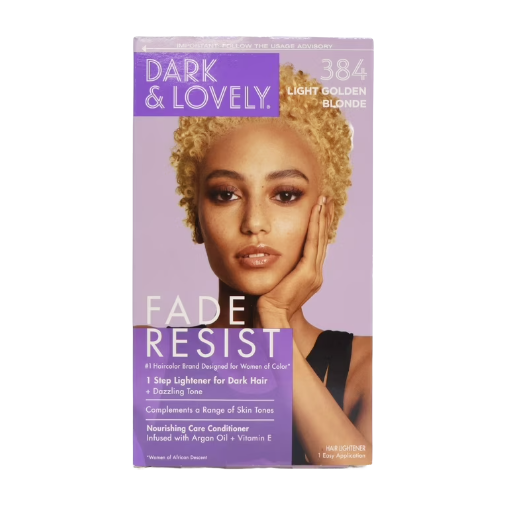
Dark And Lovely Fade Resist Hair Color, Light Golden Blonde, 384
- Nourishes hair with maximum conditioners in each step
- True
- longlasting color that
- Restores Protein for healthier-looking hair
- New ultrarich conditioning system
- Dark and Lovely permanent hair color light golden blond 384 Dark and Lovely fade-resistant rich conditioning color is a permanent hair color which delivers vibrant, fade-resistant color and shine.
- Dark and Lovely s exclusive moisture seal technologys super rich conditioning locks in shine to illuminate color.
$12.20
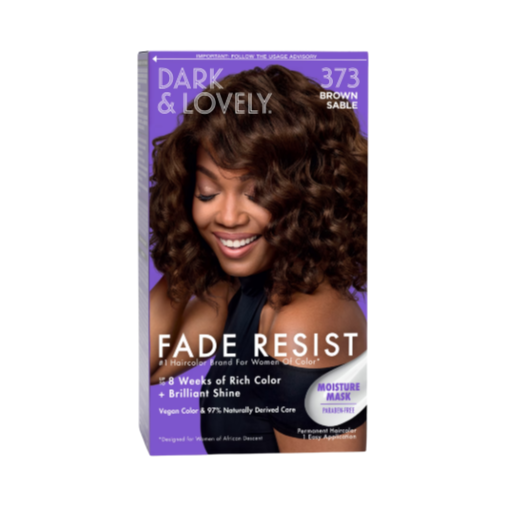
Dark and Lovely Fade Resist Rich Conditioning Hair Color, Permanent Hair Dye, 373 Brown Sable
- Fade Resist Rich Conditioning Hair Color, Unisex Permanent Hair Dye, 373 Brown Sable
- Rich Hair Color, so ultra conditioning it lasts for up to 8 weeks.
- Helps protect relaxed and natural hair while coloring.
- Permanent non drip hair dye with 100 percent gray coverage.
- With extra nourishing conditioner infused with Argan Oil and Vitamin E to provide intense nourishment.
$6.94
A Comprehensive Guide to Choosing, Using, and Loving Your New Hair Color
Let me take you back to the first time I decided to color my hair at home. Standing in the hair care aisle, overwhelmed by options, I remember picking up a box of Dark & Lovely Fade Resist almost at random. Little did I know that this impulse decision would lead to years of experimentation, learning, and eventually mastering the art of at-home hair coloring.
If you’re reading this, you’re probably considering Dark & Lovely Fade Resist for your next color transformation. Whether you’re covering grays, trying a bold new shade, or simply refreshing your current color, I’m here to share everything I’ve learned about this popular product line after years of personal use and countless conversations with other devoted users.
Why Dark & Lovely Fade Resist Stands Out
When it comes to hair color for textured hair, Dark & Lovely has built a reputation that spans decades. The Fade Resist line specifically addresses one of the most common complaints about hair color: premature fading. But what makes it truly special?
Dark & Lovely Fade Resist is specifically formulated to maintain vibrant color on textured hair for up to eight weeks, a claim I initially approached with skepticism but have found to be surprisingly accurate with proper care. The formula contains a unique color seal technology along with shea butter, vitamin E, and protein that not only deliver rich color but also condition your hair during the coloring process.
I remember touching my hair after my first application and being genuinely surprised at how soft it felt. Unlike other box dyes that left my hair feeling like straw, Dark & Lovely managed to deposit color while maintaining moisture—a crucial factor for those of us with naturally drier hair textures.
Understanding the Color Range
One of the first hurdles I faced was deciphering the extensive color range. Dark & Lovely Fade Resist offers over 18 shades, from jet blacks to warm browns, vibrant reds, and honey blondes. Each shade is numbered and named, which can be both helpful and confusing for first-time users.
Let me break down the color categories:
The Blacks (1-2)
These include Natural Black (1) and Luminous Black (2). The difference is subtle but important—Natural Black is a true, neutral black, while Luminous Black has slightly warmer undertones that give it dimension and prevent that “shoe polish” look that harsh black dyes can sometimes create.
I once used Luminous Black after a disastrous attempt at DIY highlights, and it not only covered the damage but gave my hair a healthy-looking sheen that flat black colors often lack.
The Browns (3-6)
This range includes shades like Rich Auburn (3), Dark Chocolate (4), Medium Brown (5), and Light Brown (6). The numbering generally indicates depth, with lower numbers being darker.
My personal journey with Dark & Lovely browns taught me that they tend to pull slightly warmer than the box indicates. If you’re looking for a cool-toned brown, you might want to select a shade described as “ash” or “cool.”
The Reds (7-9)
The red family includes Chestnut Blonde (7), Vivacious Red (8), and Spicy Red (9). These shades are not for the faint of heart but can create stunning results on the right base color.
I once tried Vivacious Red during what I can only describe as a quarter-life crisis, and while the maintenance was more intensive than I expected, the compliments made it worthwhile. Red pigments are the largest color molecules, which means they fade faster but also create the most dramatic results.
The Blondes and Lighteners (10-18)
From Golden Bronze (10) to Honey Blonde (18), these shades generally lighten as well as deposit color. If you have dark hair naturally, these will require more careful consideration and realistic expectations.
My first attempt at Honey Blonde taught me a valuable lesson—box dye cannot lift hair color as dramatically as professional bleach. I ended up with a warm bronze rather than the blonde on the box, which was still beautiful but not what I had envisioned.
Choosing Your Perfect Shade
After years of trial and error, I’ve developed a system for selecting the right shade of Dark & Lovely Fade Resist:
- Consider your natural base color first. The darker your starting point, the less dramatic your change can be without professional intervention.
- Identify your undertones. Look at the veins on your wrist—if they appear blue or purple, you likely have cool undertones. If they appear green, you probably have warm undertones. This can help you decide between warm shades (with words like “golden,” “honey,” or “bronze”) and cool shades (with words like “ash” or “cool”).
- Study the side of the box carefully. Dark & Lovely shows expected results on different starting colors. This is crucial information that I initially overlooked!
- When in doubt, go darker rather than lighter. It’s much easier to gradually lighten hair than to fix a too-light shade that’s turned brassy or orange.
- If covering gray is your primary goal, choose a shade that’s close to your natural color or slightly darker. The Fade Resist formula is particularly effective on gray, but the contrast between your natural gray and a dramatically different color can make regrowth more noticeable.
I learned this last point the hard way when I colored my graying temples with a shade three levels lighter than my natural color. The result? Regrowth was visible within days, not weeks.
The Pre-Coloring Preparation
Success with Dark & Lovely Fade Resist begins long before you mix the color. Here’s my tried-and-true preparation routine:
One Week Before
I start preparing my hair a full week before coloring. This means deep conditioning treatments every other day to ensure my hair is in optimal condition to receive the color.
A mistake I made early on was coloring damaged, protein-depleted hair. The result? Uneven color uptake and accelerated fading. Now I make sure my hair has a good protein-moisture balance before any chemical process.
48 Hours Before
I do a final deep condition with a color-safe mask and then switch to gentle cleansing for the next two days. This preserves my natural oils which help protect my scalp during coloring.
24 Hours Before
I perform a patch test without fail, every single time—even though I’ve used the product before. Allergies can develop at any time, and better safe than sorry when it comes to chemical processes on your scalp.
I place a small amount of the mixed color behind my ear and wait 24 hours to check for any adverse reactions. This step saved me once when I developed a mild sensitivity to a reformulated version of my usual shade.
The Night Before
I do a final detangle and section my hair into four or six parts, depending on thickness. I also lay out all my supplies—gloves, timer, old towels, petroleum jelly for my hairline, and a button-up shirt that I don’t mind staining.
One thing I never do anymore is wash my hair right before coloring. I learned from a professional colorist that a day or two of natural oils creates a protective barrier for your scalp without significantly affecting color uptake.
Application Day: My Step-by-Step Process
The day has arrived! Here’s my exact process for applying Dark & Lovely Fade Resist:
Preparation (30 minutes)
- I start by thoroughly reading the instructions, even though I’ve used the product countless times. Formulations change, and it’s better to be overprepared.
- I put on old clothes—preferably a button-up shirt that won’t need to be pulled over my head later.
- I apply petroleum jelly around my hairline, ears, and nape to prevent skin staining.
- I section my hair into four to six parts, depending on thickness, using clips or bands.
- I mix the color according to instructions, being careful not to shake (which can create bubbles) but rather gently tilting and swirling the bottle.
Application (20-30 minutes)
- I always start with my most resistant areas first—typically the grays at my temples and the back of my head where the hair is coarsest.
- Working section by section, I apply the color from roots to ends, ensuring thorough coverage.
- For touch-ups, I focus on the roots for the first 20 minutes, then pull the color through to the ends for the final 5 minutes to refresh the overall color.
- I use the applicator tip to create clean partings and ensure the color gets to every strand.
- Once all sections are covered, I use my gloved fingers to massage the color into my hair, ensuring even distribution.
Processing (25-30 minutes)
- I set a timer for exactly the time specified in the instructions—no longer, no shorter.
- While processing, I clean up any drips immediately with a damp cloth to prevent staining on surfaces.
- I use this time to read through the aftercare instructions one more time.
Rinsing and Aftercare (15 minutes)
- When the timer goes off, I rinse my hair thoroughly with lukewarm water until the water runs clear.
- I apply the included conditioner generously and leave it on for the full recommended time.
- After rinsing the conditioner, I wrap my hair in a microfiber towel rather than rubbing vigorously, which can cause color to fade more quickly.
The Crucial First Week
How you treat your hair in the first week after coloring can determine how long your color will last. Here’s my regimen:
First 48 Hours
I avoid washing my hair completely. This allows the color to fully set and the cuticle to close, sealing in the color molecules.
I also avoid heat styling during this period. If I need to style my hair, I opt for protective styles like twist-outs or braid-outs that don’t require heat.
Days 3-7
When I do wash my hair for the first time post-color, I use lukewarm water—never hot, which can open the cuticle and allow color to escape.
I exclusively use sulfate-free, color-safe shampoos and conditioners. Dark & Lovely has their own line specifically formulated for colored hair, but any quality sulfate-free product will work.
I incorporate a color-depositing conditioner that matches my shade once a week to refresh the color between full colorings.
Long-Term Maintenance
Maintaining your Dark & Lovely Fade Resist color is all about establishing a consistent care routine that preserves color integrity while keeping your hair healthy.
My Weekly Schedule
- Washing: I limit washing to twice a week maximum, using cool or lukewarm water.
- Deep Conditioning: Once weekly, focusing on moisture-protein balance.
- Protective Styling: I incorporate protective styles that keep my ends tucked away at least 3-4 days per week.
- Heat Styling: Limited to once weekly, always with heat protectant.
Monthly Treatments
- Clarifying Treatment: Once monthly to remove product buildup that can make color appear dull.
- Protein Treatment: Every 4-6 weeks to strengthen hair and help color adhere better during touch-ups.
- Color-Refreshing Gloss: I use a semi-permanent gloss in a similar shade to my Dark & Lovely color to refresh the tone without the chemical processing.
Touch-Up Strategy
For root touch-ups, I’ve found that applying color only to the regrowth area for the first 20-25 minutes, then pulling it through the lengths for the final 5 minutes prevents over-processing while still creating a cohesive look.
I typically need to touch up my roots every 6-8 weeks, which aligns perfectly with Dark & Lovely’s claim of 8-week color longevity.
Common Mistakes and How to Avoid Them
Over the years, I’ve made nearly every mistake possible with my Dark & Lovely colors. Let me save you the trouble:
Mistake #1: Choosing a Shade Based Solely on the Model’s Picture
The models on hair color boxes often have professionally colored and styled hair that may have been enhanced digitally. The side panel showing expected results on different starting colors is much more reliable.
Mistake #2: Leaving the Color on Longer for “Better” Results
I once left the color on for 45 minutes instead of the recommended 30, thinking I’d get a more intense result. Instead, I ended up with slightly damaged hair and a color that was no more vibrant than if I’d followed the instructions.
Mistake #3: Ignoring the Strand Test
When trying a new shade, always do a strand test on a small section of hair. This gives you a preview of how the color will develop on your particular hair texture and existing color.
Mistake #4: Applying Color to Wet Hair
Unless specifically directed to do so, applying color to wet hair dilutes the formula and can lead to uneven results. Dark & Lovely Fade Resist is designed to be applied to dry hair.
Mistake #5: Using Regular Shampoo Immediately After Coloring
Sulfate shampoos are color’s worst enemy. They strip away not just dirt and oil but your fresh color as well. I switched to sulfate-free formulas and immediately noticed my color lasted at least 2 weeks longer.
Troubleshooting Common Issues
Even with perfect application, issues can arise. Here’s how I’ve handled the most common problems:
Color Too Dark
If your color turns out darker than expected, try washing with a clarifying shampoo within the first 24 hours. This can remove some of the surface color without stripping it completely.
I once chose a shade too dark and successfully lightened it by mixing baking soda with my shampoo for a gentle lift. However, this should be done cautiously as it can be drying.
Brassy Tones
If your color develops unwanted orange or red tones (common when lifting darker hair), use a blue or purple toning shampoo once weekly to neutralize the brassiness.
I keep a blue shampoo in my shower specifically for when my Dark Chocolate shade starts pulling too warm.
Uneven Color
If you notice patches of uneven color, it’s usually due to inconsistent application or varying porosity throughout your hair.
For quick fixes, I use color-depositing conditioners to even out the tone until my next full application. For significant unevenness, waiting 2-3 weeks and then reapplying can help, focusing on the areas that need correction.
Premature Fading
If your color is fading faster than the promised eight weeks, evaluate your hair care routine. Hot water, frequent washing, chlorinated pools, and sun exposure are the usual culprits.
I noticed significantly less fading once I started wearing a hat for outdoor activities and using a UV-protective spray on my hair before beach days.
Special Considerations for Different Hair Types
Dark & Lovely Fade Resist works differently depending on your starting hair condition:
For Low Porosity Hair
If your hair is resistant to absorbing moisture or products, it may also resist color. I’ve found that a gentle clarifying treatment before coloring helps open the cuticle slightly for better color absorption.
Some users with extremely low porosity hair benefit from applying color to slightly damp hair (towel-dried after a gentle shampoo) to aid penetration.
For High Porosity Hair
If your hair is damaged or highly porous, it may grab color too readily, resulting in darker-than-expected results or faster fading as the color molecules escape through damaged cuticles.
I recommend a protein treatment one week before coloring to temporarily repair some porosity issues, and choosing a shade slightly lighter than your target color as highly porous hair often grabs color more intensely.
For Transitioning Hair
If you’re transitioning from relaxed to natural hair, you’re dealing with two different textures that may accept color differently. In this case, I’ve found it helpful to apply color to the natural roots first, letting it process for 10 minutes before applying to the relaxed lengths.
For Gray Coverage
Gray hair can be particularly resistant to color. For stubborn grays, I focus the application there first and sometimes leave the color on for the maximum recommended time (but never beyond).
Dark & Lovely Fade Resist has excellent gray coverage compared to many other box dyes I’ve tried, but it works best when you choose a shade that’s no more than two levels lighter than your natural color.
The Environmental and Health Considerations
While I’m a fan of Dark & Lovely Fade Resist, I believe in being honest about all aspects of hair coloring:
Reducing Chemical Exposure
No hair dye is completely “natural,” and all contain chemicals that could potentially cause sensitivity. I minimize my exposure by:
- Always working in a well-ventilated area
- Using the gloves provided in the kit
- Being careful not to get the product on my scalp when possible
- Never exceeding the recommended processing time
Eco-Friendly Disposal
I’m conscious about how I dispose of hair color products:
- I rinse the developer bottle and color tube thoroughly before recycling
- I allow the gloves to dry completely before disposing of them
- I never pour leftover mixed color down the drain but instead seal it in a disposable container before throwing it away
Alternatives for Sensitive Individuals
If you find that you’re sensitive to Dark & Lovely or want to minimize chemical usage, consider:
- Extending the time between full colorings with root touch-up products
- Using color-depositing conditioners to maintain tone between colorings
- Exploring henna or other plant-based colorants for a less chemical-intensive option
My Personal Color Journey with Dark & Lovely
Over the years, I’ve tried nearly every shade in the Dark & Lovely Fade Resist line. Here’s a brief timeline of my color journey:
- Age 25: Started with Natural Black (1) to cover my first grays
- Age 27: Experimented with Vivacious Red (8) during a bold phase
- Age 29: Settled into Dark Chocolate (4) as my signature shade
- Age 32: Lightened to Chestnut Blonde (7) for a summer change
- Age 35: Returned to Dark Chocolate but with Golden Bronze (10) highlights
- Current: Alternating between Dark Chocolate for fall/winter and Chestnut Blonde for spring/summer
Each change taught me something about how my hair responds to color, how to maintain it, and how to correct mistakes when they happen.
The Psychological Impact of Color Changes
Something I rarely see discussed in hair color guides is the emotional and psychological impact of changing your hair color. It’s not just a cosmetic change—it can affect how you see yourself and how others perceive you.
When I went red for the first time, I noticed I carried myself differently—more confidently, more willing to take risks. When I returned to a richer, darker shade, I felt more grounded and sophisticated.
Color changes can mark life transitions, boost confidence during challenging times, or simply satisfy our need for periodic renewal and transformation.
I encourage anyone considering a color change to think about not just the maintenance requirements but also how the color makes you feel. The best shade isn’t necessarily the most flattering one according to color theory—it’s the one that makes you feel most authentically yourself.
Final Thoughts: Is Dark & Lovely Fade Resist Right for You?
After years of personal experience with this product line, here’s my honest assessment:
You’ll Love Dark & Lovely Fade Resist If:
- You want excellent gray coverage at an affordable price
- You have textured hair that tends to become dry with coloring
- You’re looking for a color that genuinely resists fading
- You want a wide shade range specifically formulated for darker base colors
You Might Want to Consider Alternatives If:
- You’re looking to dramatically lighten your hair (more than 2-3 levels)
- You have a known sensitivity to PPD or other common hair dye ingredients
- You’re seeking highly specialized colors like pastels or fashion colors
For most people looking to enhance their natural color, cover gray, or make a moderate change, Dark & Lovely Fade Resist offers excellent value, reliable results, and the ability to maintain healthy hair through the coloring process.
As I look at my current color in the mirror—a rich Dark Chocolate with subtle dimension that still looks fresh six weeks after application—I remain impressed by how this accessible, drugstore product continues to deliver professional-looking results when used correctly.
Whether you’re a color novice or a veteran of at-home dyeing, I hope my experiences help guide you to your perfect shade of Dark & Lovely Fade Resist. Remember that great hair color is as much about the care routine as it is about the initial application—treat your colored hair with love, and it will reward you with vibrant, fade-resistant beauty for weeks to come.